🇰🇷 South Korea · Dentistry
Dental Implants in South Korea
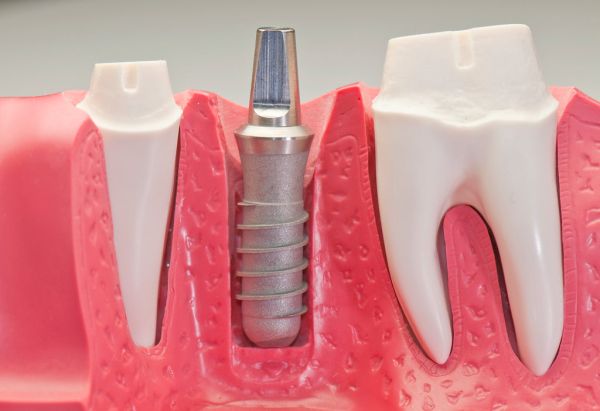
Titanium posts surgically placed into the jawbone to replace missing tooth roots, supporting crowns, bridges or full-arch restorations.
Dental Implants in South Korea typically costs $700–$2,162 — well below US prices — across the 5 clinics we track here. It can be done safely at an accredited facility with a board-certified surgeon; every clinic below is ranked on independent reviews, accreditation and price transparency, with exactly what to verify before you book.
Researched & fact-checked by the MedTraveling editorial teamLast reviewed 21 June 20265 sourced referencesNo rankings or leads sold
 Dr.Kh.Qalam / flickr · PDM
- Typical price
- $700–$2,162
- Clinics tracked
- 5
- Recovery
- 1–2 weeks per stage
- Final results
- 3–6 months
Why South Korea for dental implants
South Korea has the highest rate of cosmetic surgery per capita in the world, and Seoul's Gangnam district is the densest concentration of plastic surgery and dermatology clinics anywhere. The country is the global reference point for rhinoplasty, facial contouring, double-eyelid surgery and advanced skin treatment, backed by heavy investment in technology and a deep specialist workforce — supported by dedicated international patient centres at the larger hospitals.
World-leading cosmetic expertise
Unrivalled volume and specialisation in rhinoplasty, facial contouring and double-eyelid surgery.
Technology and precision
Heavy investment in advanced imaging, lasers and surgical technology, especially in dermatology and plastics.
International patient infrastructure
Larger hospitals run dedicated international healthcare centres with English-language coordination.
Aesthetic specialisation
A refined, detail-oriented aesthetic culture that many patients travel specifically to access.
Is dental implants in South Korea safe?
The single most-asked question — answered straight, with what to verify rather than reassurance.
Dental Implants carries the same core medical risks wherever it's performed — the variable that matters most is the provider, not the country. Confirm the clinic is a KHIDI-registered international healthcare provider and that the operating surgeon is a board-certified specialist (e.g. KSPRS for plastic surgery). Insist on a written guarantee that the named surgeon operates. Verify the surgeon on the national medical register, confirm accreditation in the issuer's public registry (we link it on every clinic profile), and get the complication and revision policy in writing. We flag what each clinic does and doesn't disclose.
What dental implants involves
A dental implant is a titanium (or zirconia) post placed into the jawbone to act as an artificial tooth root, onto which a crown, bridge or full-arch prosthesis is fixed. Implants are the most durable solution for missing teeth and, unlike bridges, do not require grinding down neighbouring teeth.
Full-arch solutions such as All-on-4 and All-on-6 — a fixed set of teeth on four or six implants — are among the most-travelled-for dental treatments, because the savings abroad (in Turkey, Hungary and Mexico) on a full-mouth case can run into many thousands. The trade-off is timing: osseointegration takes months, so treatment usually spans two trips or a longer single stay.
Why people seek it
- Permanent replacement for missing teeth
- Fixed, natural-feeling full-arch options
- Preserves jawbone
- Large savings on full-mouth cases
Techniques & options
Single implant + crown
One post replaces one tooth, topped with a custom crown.
All-on-4 / All-on-6
A full arch of fixed teeth supported by four or six implants — the standard full-mouth restoration.
Immediate-load implants
Temporary teeth fitted the same day, with the permanent prosthesis after healing.
Bone grafting / sinus lift
Adds bone where density is insufficient before or during implant placement.
The treatment process
- 1Consultation, X-ray/CT scan and treatment plan
- 2Extractions and any bone grafting if needed
- 3Surgical placement of the implant posts
- 4Healing/osseointegration period of 3–6 months
- 5Fitting of the final crowns, bridge or full-arch prosthesis
Recovery timeline
Days 1–7
Swelling and soreness; soft diet. Stitches dissolve or are removed within ~10 days.
Weeks 2–6
Gums heal; temporary teeth worn for full-arch cases.
Months 3–6
Implants fuse with bone (osseointegration) before final restoration.
Final fitting
Permanent prosthesis fitted, usually on a second visit.
Dental Implants cost in South Korea
Published provider prices vary with technique, surgeon and what each package includes. Use these as a starting range — not a personalised quote.
Typical price range
$700–$2,162
Full spread $445–$4,600 across 3 provider quotes
Prices are published provider figures, not personalised quotes. Confirm inclusions directly.
South Korea (typical)
$1,430
$450–$4,600
Home (indicative)
$4,000
typical private price
You could save
$2,570
≈ 64% less
Home-country figures are indicative typical private list prices, not quotes. Destination figures are published provider prices we track. Add travel, accommodation and any revision cost before comparing — a low headline is not the full bill. Currency conversions are approximate.
| Provider | Published price (USD) | Typically includes | Source |
|---|---|---|---|
| 365 Seoul One Top Dental Clinic | $445–$4,600 | 3D dental scan, consultation, language assistance | Provider-stated |
| Yonsei JW Dental Clinic | $700 | 3D dental scan, consultation, language assistance | Provider-stated |
| S-plant Dental Hospital | $1,160–$2,162 | implant with crown | Reported |
What drives the price: Number of implants · Implant brand (premium vs budget) · Bone grafting/sinus lift · Material of the final crowns (zirconia vs PFM) · Single vs two-trip treatment. See the full cost guide →
What's included in South Korea dental implants packages
Most providers quote all-inclusive packages — but inclusions vary. Here's what tracked clinics typically cover, and what to budget separately.
Typically included
- ✓implant with crown
- ✓3D dental scan
- ✓consultation
- ✓language assistance
Usually excluded
- ×flights
- ×accommodation
- ×Flights
Always confirm the exact inclusions in writing — a low headline price often excludes hospital stay, medication, aftercare or revision.
Clinics offering dental implants in South Korea
5 tracked providers. Profiles list accreditation, named surgeons and sources.
S-plant Dental Hospital
seoul
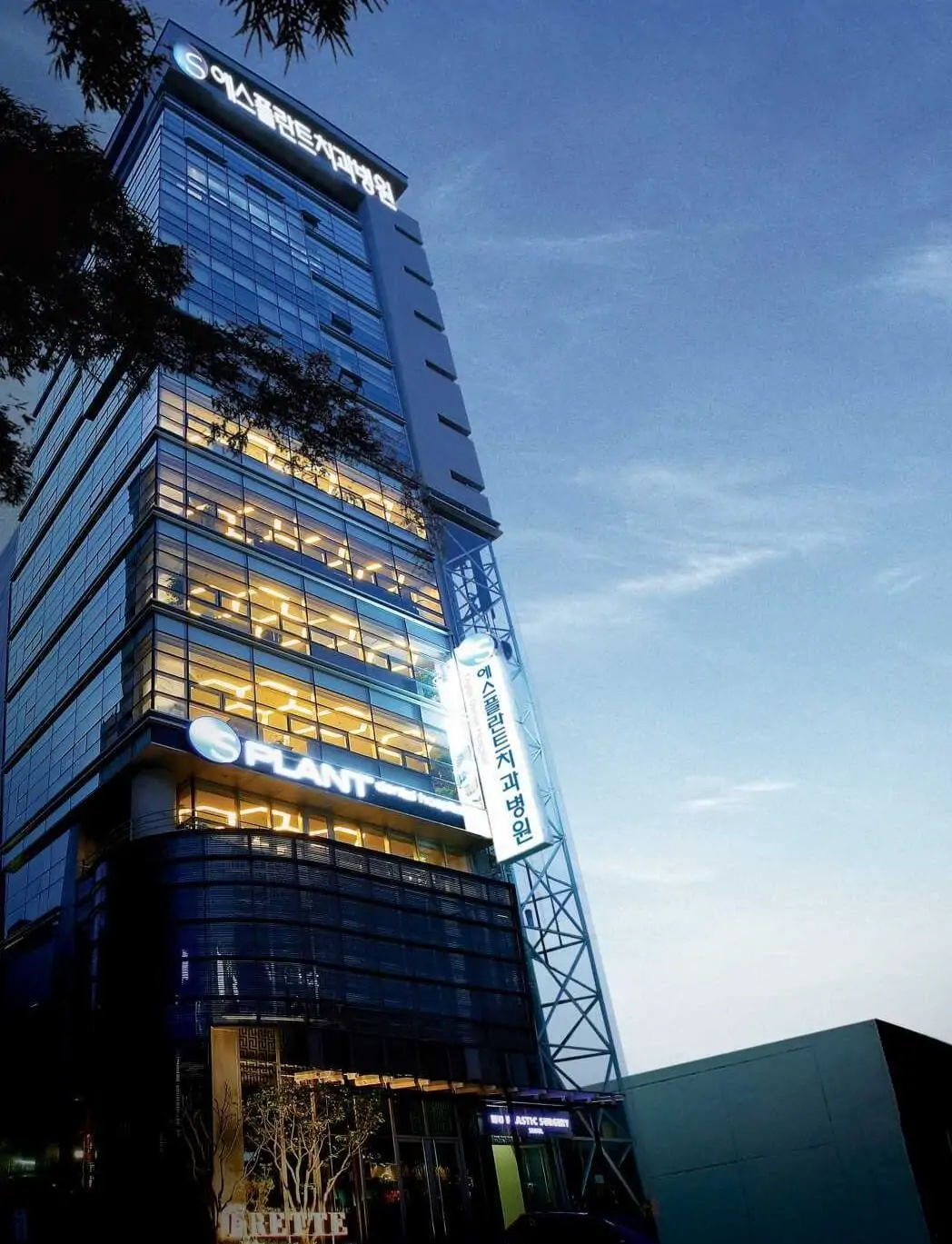
A specialized dental hospital in Seoul founded in 2008, with dentists trained at Seoul National University and over 23,000 implants performed. It focuses on dental implants, ceramic veneers and crowns, using 3D surgical modeling and an on-site dental lab, serving international patients from 40 countries.
- KOIHA accreditation
from $1,160–$2,162
Sinchon Dain Dental Hospital
seoul
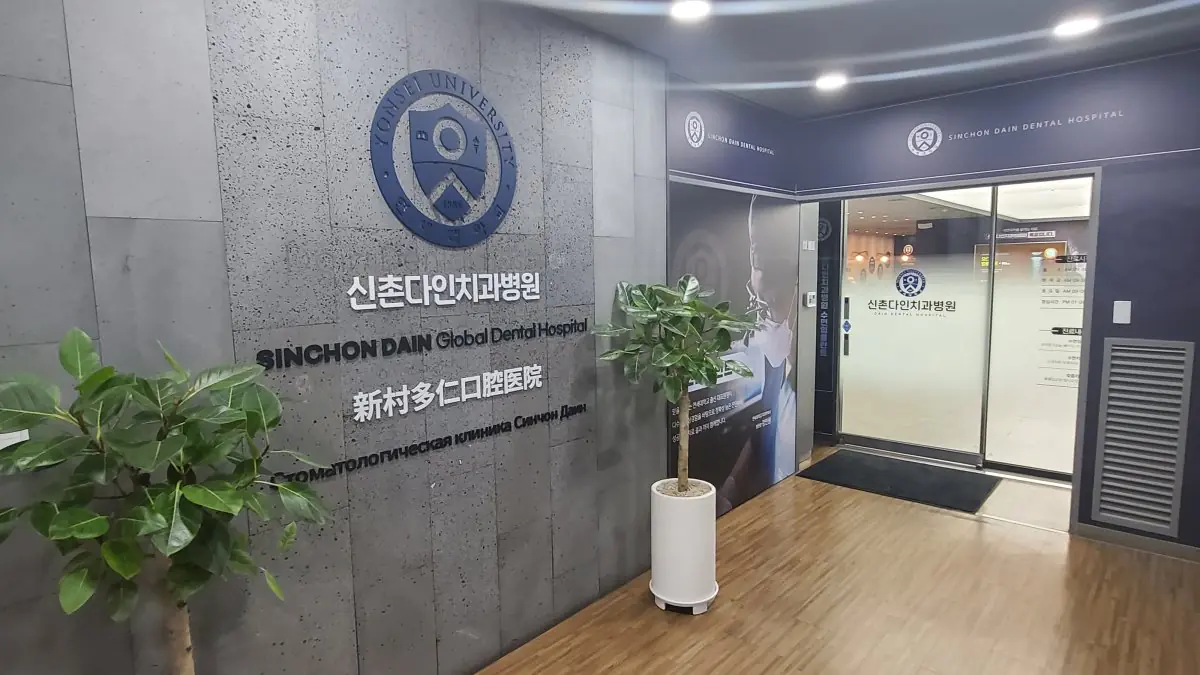
A dental hospital in the Sinchon area of Seoul offering implants, veneers and prosthetic dentistry. Lead dentist Kang Inwon is reported to have 21 years of experience and over 80,000 treatments performed.
- Registered medical institution for foreign patients
Yonsei JW Dental Clinic
seoul
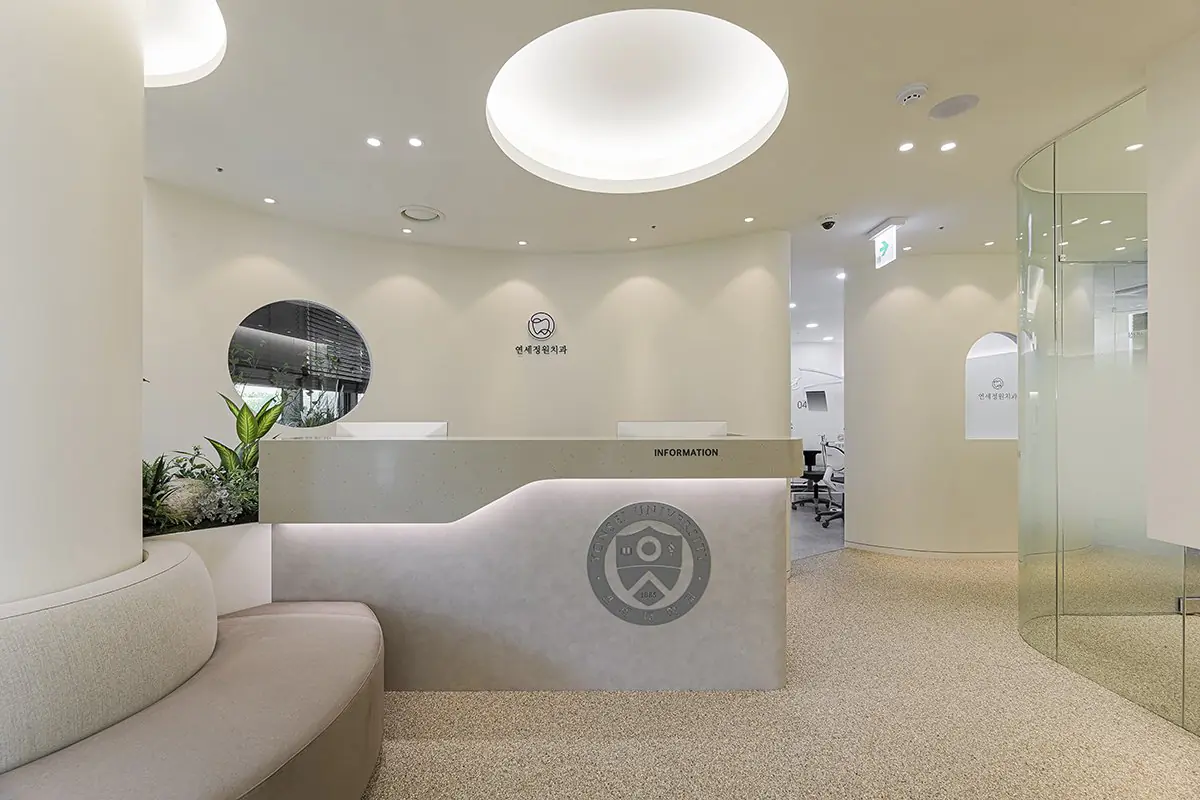
A private dental clinic in Gangnam-gu specializing exclusively in dental care, reporting roughly 5,000 international patients per year from Europe, Asia, North America and Australia. It is an official provider of the Straumann implant system, with implant work led by an SNU-trained prosthodontist.
- Straumann Dental Implant System Official Provider
from $700
365 Seoul One Top Dental Clinic
seoul
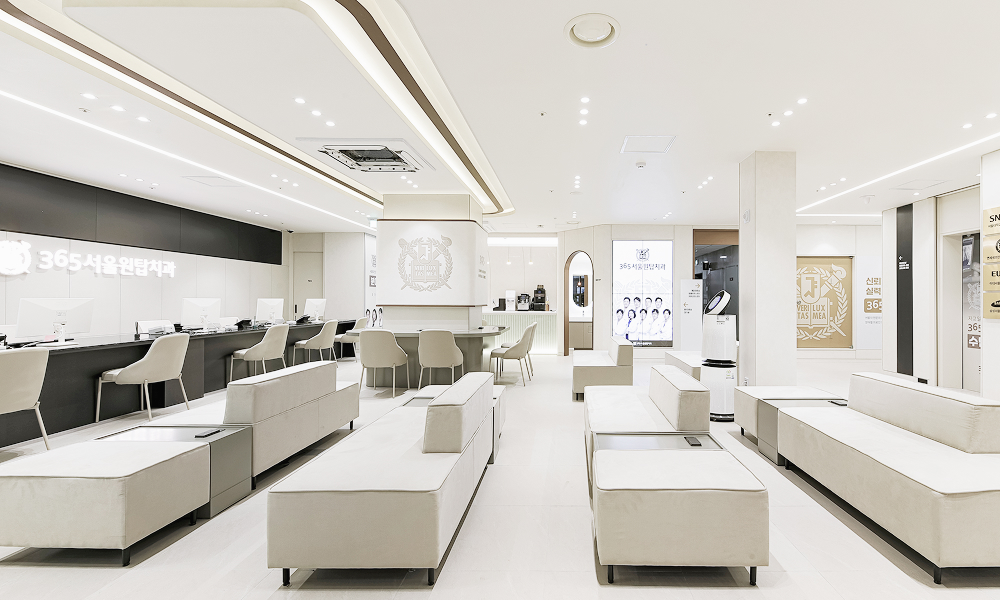
A Gangseo-gu dental clinic near Hwagok Station with an in-house dental laboratory, offering digital smile design with 3D scanning and same-day prosthetic treatment. It markets implants, veneers, crowns and orthodontics to international patients and is certified for Osstem and MegaGen implant systems.
- Korean Institute for Healthcare Accreditation
- Registered for International Patient Care
from $445–$4,600

Goodwill Dental Hospital
busan
A Busan dental hospital group in Busanjin-gu with four clinics and roughly 350 staff, describing itself as the first dental clinic in Korea to acquire JCI accreditation. It has multiple SCI-indexed publications and provides foreign-patient interpretation coordinators.
- JCI
- JCI (Joint Commission International)
Surgeons & specialists
Named clinicians associated with this procedure, drawn from clinic and registry sources.
Dental Implants by city
What to verify before you book
Travelling shifts the burden of due diligence onto you. These are the checkable signals that matter most.
For this destination
- Premium pricing. Korea is a premium market; expect to pay more than in Turkey or Mexico for comparable cosmetic procedures.
- Broker and 'ghost surgery' risk. Confirm in writing that your named surgeon performs the operation — Korea has had documented 'ghost surgery' cases.
- Language and logistics. Outside international centres, English support varies; use clinics with formal international patient services.
Questions to ask
- ›Which implant brand do you use, and is it internationally recognised?
- ›Is the cost of bone grafting, abutments and final crowns included?
- ›How many visits will my case require, and over what timeframe?
- ›What guarantee covers the implants and the crowns?
Accreditation context. Confirm the clinic is a KHIDI-registered international healthcare provider and that the operating surgeon is a board-certified specialist (e.g. KSPRS for plastic surgery). Insist on a written guarantee that the named surgeon operates.
Risks & complications
- Implant failure / non-integration
- Infection (peri-implantitis)
- Nerve injury or sinus complications
- Poorly fitted prosthesis
- Need for unplanned bone grafting
Take this with you
Everything to carry into a consultation — yours to print, no sign-up.
Patient decision kit
Dental Implants in South Korea — take this with you
Yours to keep. No sign-up, no contact details, nothing sold.
Questions to ask
- Which implant brand do you use, and is it internationally recognised?
- Is the cost of bone grafting, abutments and final crowns included?
- How many visits will my case require, and over what timeframe?
- What guarantee covers the implants and the crowns?
Get these in writing
- The exact named surgeon who will operate — and their registration number
- A full itemised quote: what is and isn't included, in your currency
- The complication and revision policy, including who pays if something goes wrong
- The aftercare plan once you are home, and how follow-up is handled remotely
- Accreditation certificates and their expiry dates
Walk away if you see
- The surgeon who operates won't be named or confirmed in writing
- Pressure to pay a large deposit fast, or a 'today only' price
- No written complication or revision policy
- Accreditation claimed but no certificate or registry you can check
- Reviews only on the clinic's own site, none independent
- A quote far below every other provider with no explanation of what's excluded
How to verify claims
- Confirm the clinic is a KHIDI-registered international healthcare provider and that the operating surgeon is a board-certified specialist (e.g. KSPRS for plastic surgery). Insist on a written guarantee that the named surgeon operates.
- Cross-check the surgeon on the national medical register, not just the clinic page
- Confirm accreditation currency in the issuer's public registry (we link to it on each profile)
- Ask for independent reviews and the source — not screenshots
MedTraveling is independent: we don't sell rankings or your details, and listing a provider is not an endorsement. This kit is decision support, not medical advice — confirm everything directly with a qualified clinician before treatment.
Frequently asked questions
How much does a dental implant cost in Korea?
Across 3 published quotes we track, dental implants in South Korea runs $445–$4,600, with a typical range of $700–$2,162 — roughly 64% below an indicative US private price of about $4,000. Always confirm what a quote includes — the headline figure rarely covers everything.
Is Korea good for dental implants?
"Good" depends on the specific clinic and surgeon, not the destination. South Korea has highly experienced dentistry providers, but quality varies widely — which is why we score every clinic on a published transparency index and show what's verifiable (accreditation, named surgeons, sources) and what's missing, so you judge a provider rather than a country.
What country is best for dental implants?
We don't crown a single "best" or "cheapest" country — quality lives at the clinic level, not the border. For dental implants, South Korea is a major destination with tracked prices of $700–$2,162; compare it head-to-head with other destinations on our comparison pages and rank individual clinics by the MedTraveling Transparency Index rather than trusting a national reputation.
How long does a Korean implant last?
For dental implants, most people are back to everyday activities in about 1–2 weeks per stage, with fuller results developing over 3–6 months. Plan your trip and any follow-up around that, and confirm in writing who manages aftercare once you're back home.