🇰🇷 South Korea · Hair restoration
Hair Transplant in South Korea
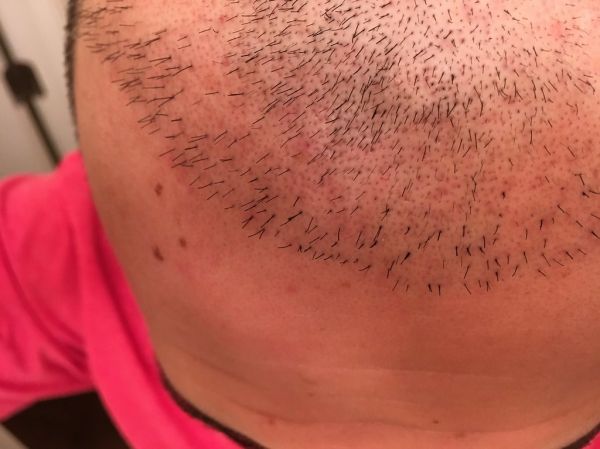
A surgical procedure that moves hair follicles from a donor area (usually the back of the scalp) to thinning or balding zones, giving permanent, natural-looking regrowth.
Hair Transplant in South Korea typically costs $3,450–$8,960 — well below US prices — across the 7 clinics we track here. It can be done safely at an accredited facility with a board-certified surgeon; every clinic below is ranked on independent reviews, accreditation and price transparency, with exactly what to verify before you book.
Researched & fact-checked by the MedTraveling editorial teamLast reviewed 21 June 202610 sourced referencesNo rankings or leads sold
 maorblog1 / flickr · BY-SA
- Typical price
- $3,450–$8,960
- Clinics tracked
- 7
- Recovery
- 7–14 days
- Final results
- 12–18 months
Why South Korea for hair transplant
South Korea has the highest rate of cosmetic surgery per capita in the world, and Seoul's Gangnam district is the densest concentration of plastic surgery and dermatology clinics anywhere. The country is the global reference point for rhinoplasty, facial contouring, double-eyelid surgery and advanced skin treatment, backed by heavy investment in technology and a deep specialist workforce — supported by dedicated international patient centres at the larger hospitals.
World-leading cosmetic expertise
Unrivalled volume and specialisation in rhinoplasty, facial contouring and double-eyelid surgery.
Technology and precision
Heavy investment in advanced imaging, lasers and surgical technology, especially in dermatology and plastics.
International patient infrastructure
Larger hospitals run dedicated international healthcare centres with English-language coordination.
Aesthetic specialisation
A refined, detail-oriented aesthetic culture that many patients travel specifically to access.
Is hair transplant in South Korea safe?
The single most-asked question — answered straight, with what to verify rather than reassurance.
Hair Transplant carries the same core medical risks wherever it's performed — the variable that matters most is the provider, not the country. Confirm the clinic is a KHIDI-registered international healthcare provider and that the operating surgeon is a board-certified specialist (e.g. KSPRS for plastic surgery). Insist on a written guarantee that the named surgeon operates. Verify the surgeon on the national medical register, confirm accreditation in the issuer's public registry (we link it on every clinic profile), and get the complication and revision policy in writing. We flag what each clinic does and doesn't disclose.
What hair transplant involves
A hair transplant relocates healthy, genetically resistant follicles from a donor area to areas of thinning or baldness. Because the moved follicles keep their resistance to the hormone that drives male-pattern hair loss, results are permanent — but the surgery does not stop ongoing loss of your remaining native hair, which is why surgeon planning and density management matter as much as graft count.
It is the single most common reason patients travel to Turkey, where high case volume and package pricing have made FUE transplants dramatically cheaper than in Western Europe or the US. The quality gap between clinics is wide: outcomes depend on accurate hairline design, careful graft handling, and whether qualified surgeons — not only technicians — perform the critical steps.
Why people seek it
- Permanent, natural regrowth
- Restores hairline and density
- One-time procedure
- Major price savings abroad
Techniques & options
FUE (Follicular Unit Extraction)
Individual follicular units are extracted with a micro-punch and implanted one by one. No linear scar; the standard technique for most travel patients.
DHI (Direct Hair Implantation)
A variant of FUE using a Choi implanter pen that creates the channel and places the graft in one step, allowing dense packing and precise angling.
Sapphire FUE
FUE using sapphire blades to open recipient channels, intended to reduce trauma and speed healing.
FUT (strip)
A strip of donor scalp is removed and dissected into grafts, leaving a linear scar. Less common for travel patients but allows large graft yields.
The treatment process
- 1Online consultation with photos to estimate graft count and design the hairline
- 2On-site assessment, blood tests and donor-area evaluation
- 3Local anaesthetic; extraction of follicular units from the donor area
- 4Creation of recipient channels and implantation of grafts (often a full day)
- 5Post-op wash instructions and first wash, usually the next day
Recovery timeline
Days 1–7
Scabbing and redness in the recipient area; careful washing per protocol. Donor area heals quickly.
Weeks 2–4
Transplanted hairs shed ('shock loss') — this is expected and not a failure.
Months 3–6
New growth begins from the transplanted follicles.
Months 12–18
Final density and texture; full result assessed at this point.
Hair Transplant cost in South Korea
Published provider prices vary with technique, surgeon and what each package includes. Use these as a starting range — not a personalised quote.
Typical price range
$3,450–$8,960
Full spread $1,980–$13,860 across 6 provider quotes
Prices are published provider figures, not personalised quotes. Confirm inclusions directly.
South Korea (typical)
$6,210
$1,980–$13,860
Home (indicative)
$12,000
typical private price
You could save
$5,800
≈ 48% less
Home-country figures are indicative typical private list prices, not quotes. Destination figures are published provider prices we track. Add travel, accommodation and any revision cost before comparing — a low headline is not the full bill. Currency conversions are approximate.
| Provider | Published price (USD) | Typically includes | Source |
|---|---|---|---|
| Maxwell Hair Clinic | $1,980–$8,920 | procedure | Reported |
| MOJELIM Hair Transplant | $3,000–$9,000 | FUE/FUT graft session | Reported |
| Seojin Plastic Surgery & Hair Transplant | $3,000–$9,000 | graft session | Reported |
| MOAMAN Hair Transplant Clinic | $3,900–$8,600 | procedure | Reported |
| Forhair Korea | $3,900–$8,600 | procedure | Reported |
| Wonjin Plastic Surgery (Wonjin Beauty Medical Group) | $5,500–$13,860 | FUE / non-incision method | Reported |
What drives the price: Number of grafts · Technique (FUE/DHI/Sapphire) · Whether a surgeon or technician performs key steps · Clinic reputation and accreditation · Package inclusions (hotel, transfers, medication). See the full cost guide →
What's included in South Korea hair transplant packages
Most providers quote all-inclusive packages — but inclusions vary. Here's what tracked clinics typically cover, and what to budget separately.
Typically included
- ✓FUE / non-incision method
- ✓procedure
- ✓FUE/FUT graft session
- ✓graft session
Usually excluded
- ×flights
- ×accommodation
- ×Flights
Always confirm the exact inclusions in writing — a low headline price often excludes hospital stay, medication, aftercare or revision.
Clinics offering hair transplant in South Korea
7 tracked providers. Profiles list accreditation, named surgeons and sources.
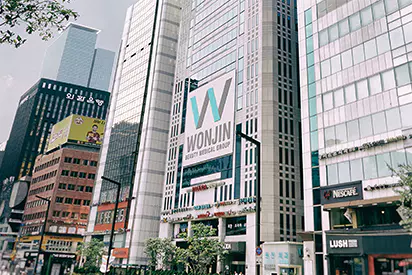
Wonjin Plastic Surgery (Wonjin Beauty Medical Group)
seoul
Wonjin is a well-known Gangnam plastic surgery and beauty medical group operating since around 1999, with a multi-department staff spanning plastic surgery, dermatology and anesthesiology. It is widely recognized for facial contouring, eyelid surgery and body contouring.
from $5,500–$13,860
Cheongdam Oracle Dermatology Clinic
seoul
Oracle Dermatology is Korea's largest dermatology network clinic, first opened in 2004, with its head office in Cheongdam, Gangnam, Seoul. It provides laser skin treatments, anti-aging, body contouring and scalp/hair therapy across many branches.
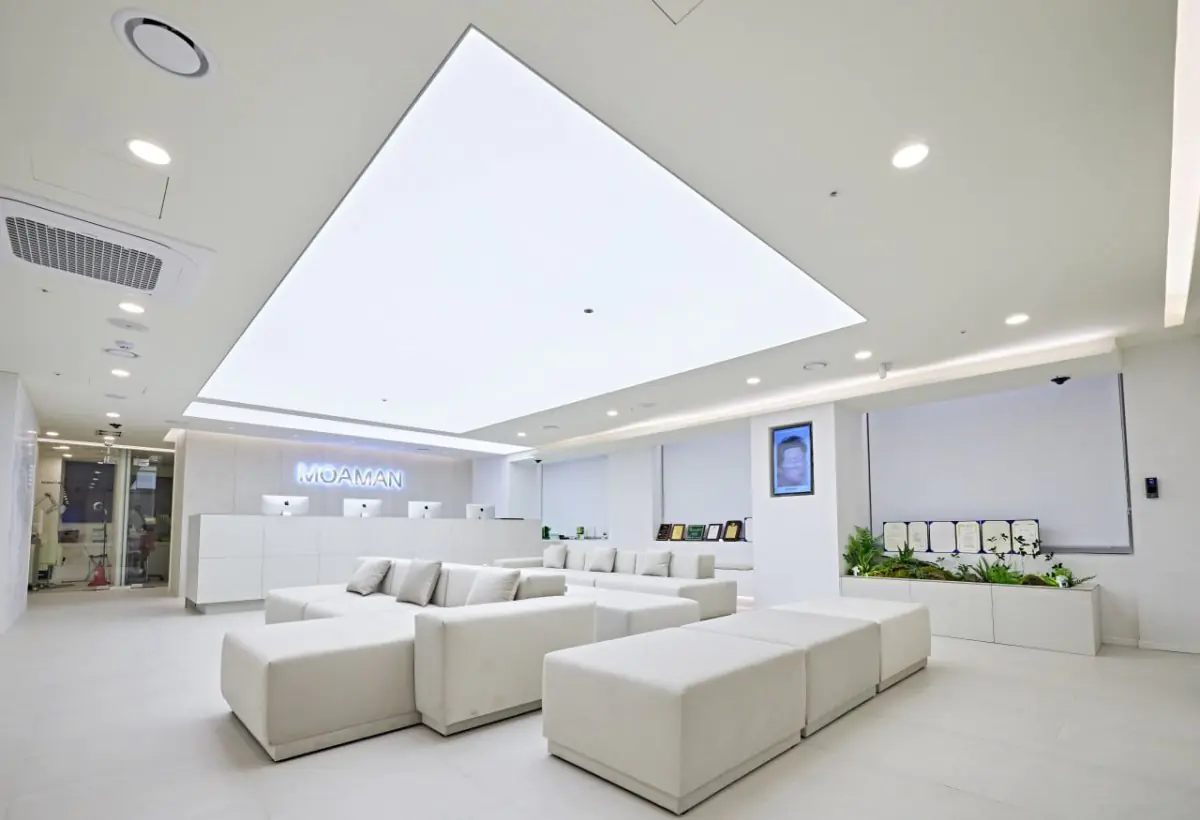
MOAMAN Hair Transplant Clinic
seoul
MOAMAN is a Gangnam clinic specializing exclusively in hair-loss treatment and transplantation, with a team of several surgeons and a Bookimed 2019 award for best hair transplant clinic. It offers FUE, DHI, FUT and no-shave techniques plus PRP and stem-cell hair treatments.
- KOIHA accreditation
- ISHRS membership
from $3,900–$8,600
Maxwell Hair Clinic
seoul
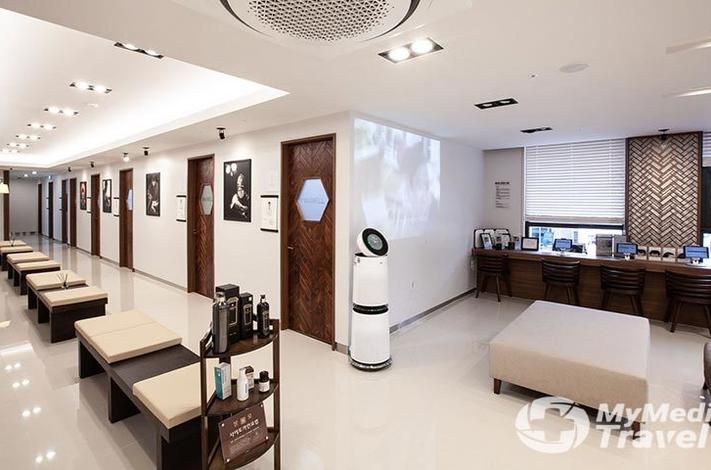
Maxwell Hair Clinic is a Seoul clinic in Dogok-dong specializing in hair-loss treatment, hair transplantation and hairline correction for men and women. It serves both local and foreign patients.
from $1,980–$8,920
Forhair Korea
seoul
Forhair is a hair-restoration medical group that opened its Seoul (Seocho) clinic in 2006 and also operates branches in Daegu and Busan. It specializes in FUE and FUT hair transplantation and hairline design.
from $3,900–$8,600
MOJELIM Hair Transplant
seoul
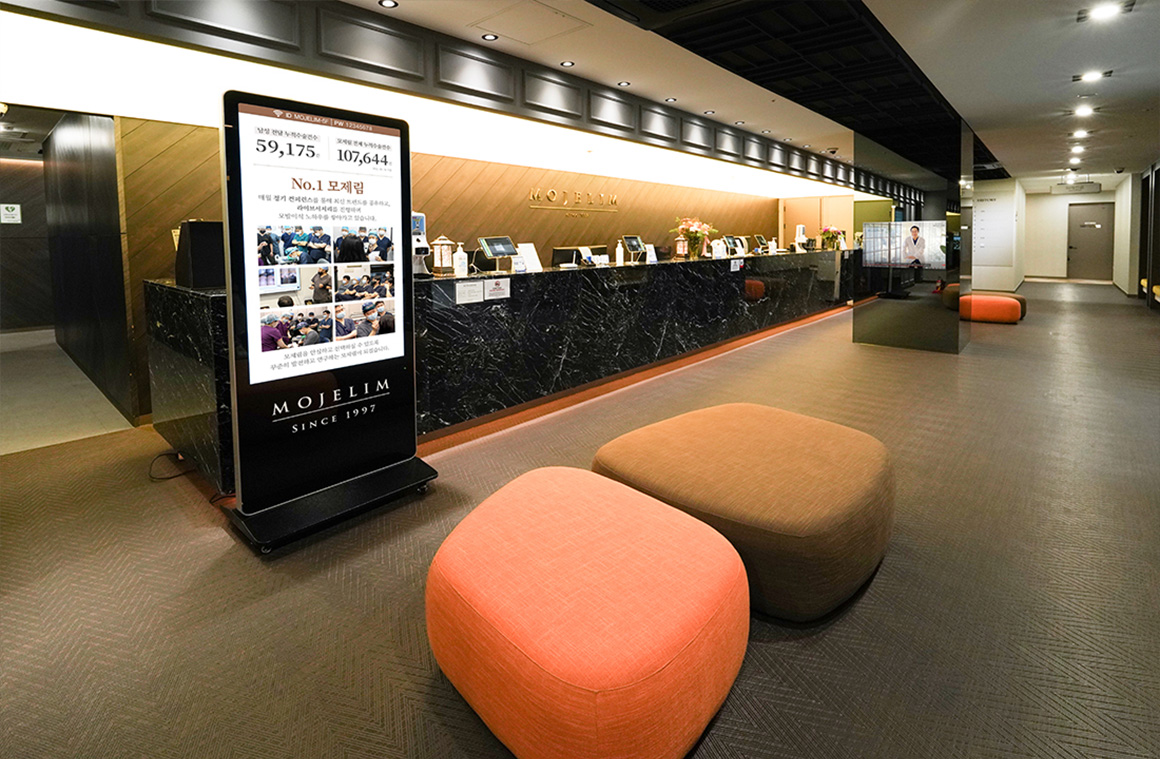
A dedicated hair transplant clinic in the Apgujeong area of Gangnam, Seoul, operating since 1997 and describing itself as a first-generation Korean hair transplant center. It offers FUT (incision) and FUE (non-incision) methods plus eyebrow, beard, scar and female hairline procedures, reporting over 130,000 cumulative surgeries.
from $3,000–$9,000
Seojin Plastic Surgery & Hair Transplant
seoul
A plastic surgery and premium hair transplant clinic in central Gangnam, Seoul, led by hair transplant specialist Dr. Lee Hyeong-Min. It positions itself as a recognized leader in advanced surgical procedures and hair restoration, combining plastic surgery expertise with dedicated hair transplant services.
from $3,000–$9,000
Surgeons & specialists
Named clinicians associated with this procedure, drawn from clinic and registry sources.
Dr. Kim Dae Young
Hair Transplant Surgeon · Hair restoration
Korean Society of Hair Transplantation
Dr. Kim Bum-ryeol
Hair Transplant Surgeon · Hair restoration
Dr. Hyeong Seok Kim
Hair Restoration Specialist · Hair restoration
Dr. Yoon Woo Noh
Hair Restoration Specialist · Hair restoration
Dr. Hwang Jung-wook
Chief Director · Hair Transplant
Dr. Lee Hyeong-Min
Hair Transplant Specialist · Hair Transplant
Hair Transplant by city
What to verify before you book
Travelling shifts the burden of due diligence onto you. These are the checkable signals that matter most.
For this destination
- Premium pricing. Korea is a premium market; expect to pay more than in Turkey or Mexico for comparable cosmetic procedures.
- Broker and 'ghost surgery' risk. Confirm in writing that your named surgeon performs the operation — Korea has had documented 'ghost surgery' cases.
- Language and logistics. Outside international centres, English support varies; use clinics with formal international patient services.
Questions to ask
- ›Will a qualified surgeon, not only technicians, perform the extraction and implantation?
- ›How many grafts do I realistically need, and how is that estimated?
- ›What is your graft survival rate and how is it measured?
- ›What happens if the result is poor — is revision included?
Accreditation context. Confirm the clinic is a KHIDI-registered international healthcare provider and that the operating surgeon is a board-certified specialist (e.g. KSPRS for plastic surgery). Insist on a written guarantee that the named surgeon operates.
Risks & complications
- Patchy or low density from poor planning
- Visible 'pluggy' or unnatural hairline
- Donor-area over-harvesting
- Folliculitis or infection
- Poor graft survival from rough handling
Take this with you
Everything to carry into a consultation — yours to print, no sign-up.
Patient decision kit
Hair Transplant in South Korea — take this with you
Yours to keep. No sign-up, no contact details, nothing sold.
Questions to ask
- Will a qualified surgeon, not only technicians, perform the extraction and implantation?
- How many grafts do I realistically need, and how is that estimated?
- What is your graft survival rate and how is it measured?
- What happens if the result is poor — is revision included?
Get these in writing
- The exact named surgeon who will operate — and their registration number
- A full itemised quote: what is and isn't included, in your currency
- The complication and revision policy, including who pays if something goes wrong
- The aftercare plan once you are home, and how follow-up is handled remotely
- Accreditation certificates and their expiry dates
Walk away if you see
- The surgeon who operates won't be named or confirmed in writing
- Pressure to pay a large deposit fast, or a 'today only' price
- No written complication or revision policy
- Accreditation claimed but no certificate or registry you can check
- Reviews only on the clinic's own site, none independent
- A quote far below every other provider with no explanation of what's excluded
How to verify claims
- Confirm the clinic is a KHIDI-registered international healthcare provider and that the operating surgeon is a board-certified specialist (e.g. KSPRS for plastic surgery). Insist on a written guarantee that the named surgeon operates.
- Cross-check the surgeon on the national medical register, not just the clinic page
- Confirm accreditation currency in the issuer's public registry (we link to it on each profile)
- Ask for independent reviews and the source — not screenshots
MedTraveling is independent: we don't sell rankings or your details, and listing a provider is not an endorsement. This kit is decision support, not medical advice — confirm everything directly with a qualified clinician before treatment.
Frequently asked questions
Is South Korea good for hair transplants?
"Good" depends on the specific clinic and surgeon, not the destination. South Korea has highly experienced hair restoration providers, but quality varies widely — which is why we score every clinic on a published transparency index and show what's verifiable (accreditation, named surgeons, sources) and what's missing, so you judge a provider rather than a country.
What country is best for hair transplants?
We don't crown a single "best" or "cheapest" country — quality lives at the clinic level, not the border. For hair transplant, South Korea is a major destination with tracked prices of $3,450–$8,960; compare it head-to-head with other destinations on our comparison pages and rank individual clinics by the MedTraveling Transparency Index rather than trusting a national reputation.
How much do 3,000 hair grafts cost?
Across 6 published quotes we track, hair transplant in South Korea runs $1,980–$13,860, with a typical range of $3,450–$8,960 — roughly 48% below an indicative US private price of about $12,000. Clinics usually quote all-inclusive packages by graft count, so a higher graft number sits toward the upper end of this range. Always confirm what a quote includes — the headline figure rarely covers everything.
Is it cheaper to get a hair transplant in Korea?
Across 6 published quotes we track, hair transplant in South Korea runs $1,980–$13,860, with a typical range of $3,450–$8,960 — roughly 48% below an indicative US private price of about $12,000. Always confirm what a quote includes — the headline figure rarely covers everything.
Is Turkey or Korea better for hair transplant?
It depends on what you can verify, not the country alone. On the figures we track, hair transplant in South Korea is $3,450–$8,960 — roughly 48% below an indicative US private price of about $12,000. Weigh travel distance against follow-up, then compare named-surgeon, accredited clinics side by side — picking a country sight-unseen is how people get caught out.