Dentistry
Dental Implants abroad
Titanium posts surgically placed into the jawbone to replace missing tooth roots, supporting crowns, bridges or full-arch restorations.
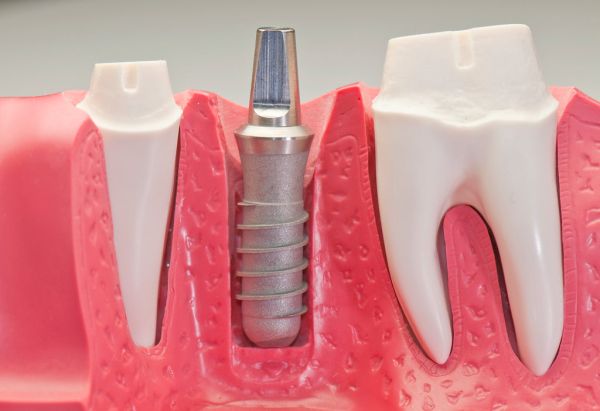 Dr.Kh.Qalam / flickr · PDM
- Global range
- $400–$30,000
- Clinics tracked
- 40
- Recovery
- 1–2 weeks per stage
- Final results
- 3–6 months
Overview
A dental implant is a titanium (or zirconia) post placed into the jawbone to act as an artificial tooth root, onto which a crown, bridge or full-arch prosthesis is fixed. Implants are the most durable solution for missing teeth and, unlike bridges, do not require grinding down neighbouring teeth.
Full-arch solutions such as All-on-4 and All-on-6 — a fixed set of teeth on four or six implants — are among the most-travelled-for dental treatments, because the savings abroad (in Turkey, Hungary and Mexico) on a full-mouth case can run into many thousands. The trade-off is timing: osseointegration takes months, so treatment usually spans two trips or a longer single stay.
Where to get it
Tracked destinations with cost ranges. Open a destination for clinics, surgeons and what to verify.
Techniques
Single implant + crown
One post replaces one tooth, topped with a custom crown.
All-on-4 / All-on-6
A full arch of fixed teeth supported by four or six implants — the standard full-mouth restoration.
Immediate-load implants
Temporary teeth fitted the same day, with the permanent prosthesis after healing.
Bone grafting / sinus lift
Adds bone where density is insufficient before or during implant placement.
The process
- 1Consultation, X-ray/CT scan and treatment plan
- 2Extractions and any bone grafting if needed
- 3Surgical placement of the implant posts
- 4Healing/osseointegration period of 3–6 months
- 5Fitting of the final crowns, bridge or full-arch prosthesis
Recovery timeline
Days 1–7
Swelling and soreness; soft diet. Stitches dissolve or are removed within ~10 days.
Weeks 2–6
Gums heal; temporary teeth worn for full-arch cases.
Months 3–6
Implants fuse with bone (osseointegration) before final restoration.
Final fitting
Permanent prosthesis fitted, usually on a second visit.
Candidacy
- ✓Adequate jawbone density (or willingness to have grafting)
- ✓Healthy gums and good oral hygiene
- ✓Non-smoker or willing to stop around surgery
- ✓Realistic about multi-stage timing
What to ask
- ›Which implant brand do you use, and is it internationally recognised?
- ›Is the cost of bone grafting, abutments and final crowns included?
- ›How many visits will my case require, and over what timeframe?
- ›What guarantee covers the implants and the crowns?
Risks
- Implant failure / non-integration
- Infection (peri-implantitis)
- Nerve injury or sinus complications
- Poorly fitted prosthesis
- Need for unplanned bone grafting
Dental Implants abroad: frequently asked questions
Which country does the best dental implants?
No single country is "best" for dental implants — it depends on the clinic, not the border. The most-travelled-for destinations we cover are Turkey, Mexico and South Korea; compare them on cost and the MedTraveling Transparency Index instead of picking by reputation.
Is it cheaper to get dental implants abroad?
Abroad, dental implants typically runs $400–$30,000 depending on the country and clinic, roughly -280% below a typical US private price of about $4,000. We track live published prices by destination — open the cost guide for Turkey, Mexico and South Korea to see clinic-by-clinic figures rather than a single average.
How long do dental implants last?
With good hygiene, implant posts can last decades — often a lifetime. The crowns on top may need replacement after 10–15 years.
Can it all be done in one trip?
Immediate-load ('same-day teeth') cases can place implants and temporary teeth in one visit, but the permanent prosthesis usually needs a second trip after months of healing.
Does the price include the crowns?
Not always — confirm whether the quote covers abutments, the final crowns and any grafting, as these can substantially change the total.