Hair restoration
Hair Transplant abroad
A surgical procedure that moves hair follicles from a donor area (usually the back of the scalp) to thinning or balding zones, giving permanent, natural-looking regrowth.
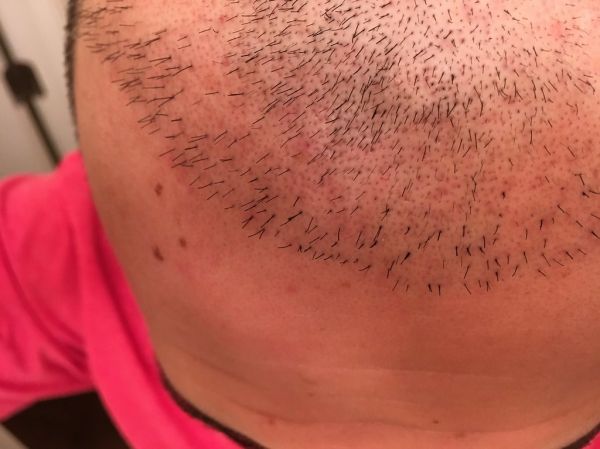 maorblog1 / flickr · BY-SA
- Global range
- $1,500–$15,000
- Clinics tracked
- 39
- Recovery
- 7–14 days
- Final results
- 12–18 months
Overview
A hair transplant relocates healthy, genetically resistant follicles from a donor area to areas of thinning or baldness. Because the moved follicles keep their resistance to the hormone that drives male-pattern hair loss, results are permanent — but the surgery does not stop ongoing loss of your remaining native hair, which is why surgeon planning and density management matter as much as graft count.
It is the single most common reason patients travel to Turkey, where high case volume and package pricing have made FUE transplants dramatically cheaper than in Western Europe or the US. The quality gap between clinics is wide: outcomes depend on accurate hairline design, careful graft handling, and whether qualified surgeons — not only technicians — perform the critical steps.
Where to get it
Tracked destinations with cost ranges. Open a destination for clinics, surgeons and what to verify.
Techniques
FUE (Follicular Unit Extraction)
Individual follicular units are extracted with a micro-punch and implanted one by one. No linear scar; the standard technique for most travel patients.
DHI (Direct Hair Implantation)
A variant of FUE using a Choi implanter pen that creates the channel and places the graft in one step, allowing dense packing and precise angling.
Sapphire FUE
FUE using sapphire blades to open recipient channels, intended to reduce trauma and speed healing.
FUT (strip)
A strip of donor scalp is removed and dissected into grafts, leaving a linear scar. Less common for travel patients but allows large graft yields.
The process
- 1Online consultation with photos to estimate graft count and design the hairline
- 2On-site assessment, blood tests and donor-area evaluation
- 3Local anaesthetic; extraction of follicular units from the donor area
- 4Creation of recipient channels and implantation of grafts (often a full day)
- 5Post-op wash instructions and first wash, usually the next day
Recovery timeline
Days 1–7
Scabbing and redness in the recipient area; careful washing per protocol. Donor area heals quickly.
Weeks 2–4
Transplanted hairs shed ('shock loss') — this is expected and not a failure.
Months 3–6
New growth begins from the transplanted follicles.
Months 12–18
Final density and texture; full result assessed at this point.
Candidacy
- ✓Stable, well-defined hair loss with a healthy donor area
- ✓Realistic expectations about achievable density
- ✓Generally over 25, once the loss pattern is established
- ✓Good general health and no untreated scalp conditions
What to ask
- ›Will a qualified surgeon, not only technicians, perform the extraction and implantation?
- ›How many grafts do I realistically need, and how is that estimated?
- ›What is your graft survival rate and how is it measured?
- ›What happens if the result is poor — is revision included?
Risks
- Patchy or low density from poor planning
- Visible 'pluggy' or unnatural hairline
- Donor-area over-harvesting
- Folliculitis or infection
- Poor graft survival from rough handling
Hair Transplant abroad: frequently asked questions
Which country is best for hair transplant in the world?
No single country is "best" for hair transplant — it depends on the clinic, not the border. The most-travelled-for destinations we cover are Turkey, Mexico and South Korea; compare them on cost and the MedTraveling Transparency Index instead of picking by reputation.
How much do 3,000 hair grafts cost in Turkey?
Abroad, hair transplant typically runs $1,500–$15,000 depending on the country and clinic, roughly 31% below a typical US private price of about $12,000. We track live published prices by destination — open the cost guide for Turkey, Mexico and South Korea to see clinic-by-clinic figures rather than a single average.
Is a hair transplant permanent?
The transplanted follicles are permanent because they resist the hormone that causes pattern baldness. However, your existing native hair can continue to thin, so ongoing medical treatment is often recommended.
How many grafts do I need?
It depends on the area and desired density — a receding hairline may need 1,500–2,500 grafts, while extensive baldness can require 4,000+. A proper estimate needs an in-person or photo assessment.
Does it hurt?
The procedure is done under local anaesthetic and is generally not painful, though the scalp can be tender for a few days afterward.